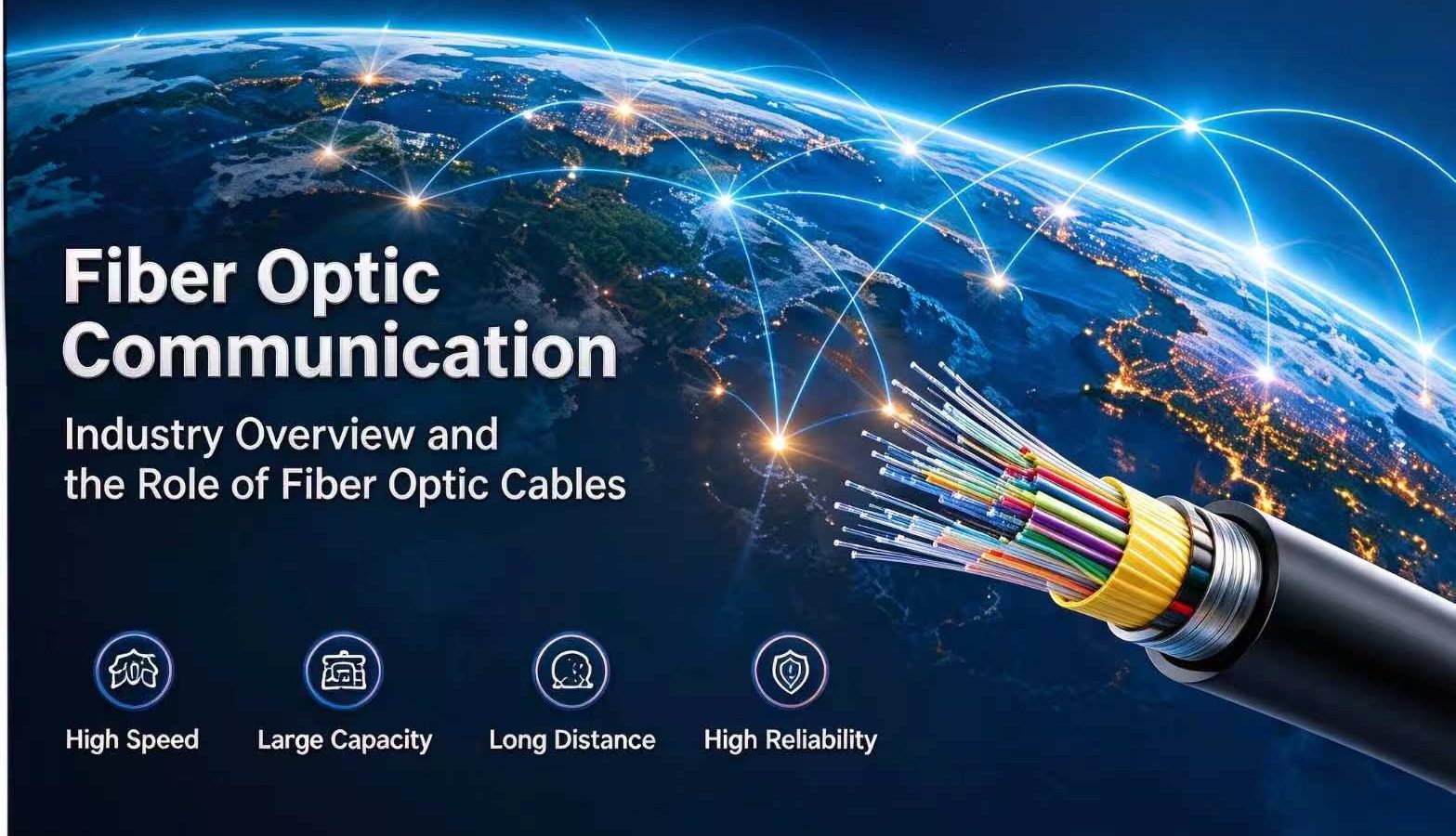
Fiber optic communication has become an essential part of modern telecommunications infrastructure. By transmitting information as light signals through glass fibers, it carries far more data, over far greater distances, than copper ever could.
Today, fiber optic networks support broadband internet, mobile communication, enterprise networks, power utilities and international connectivity.
Why Fiber Optic Communication Matters
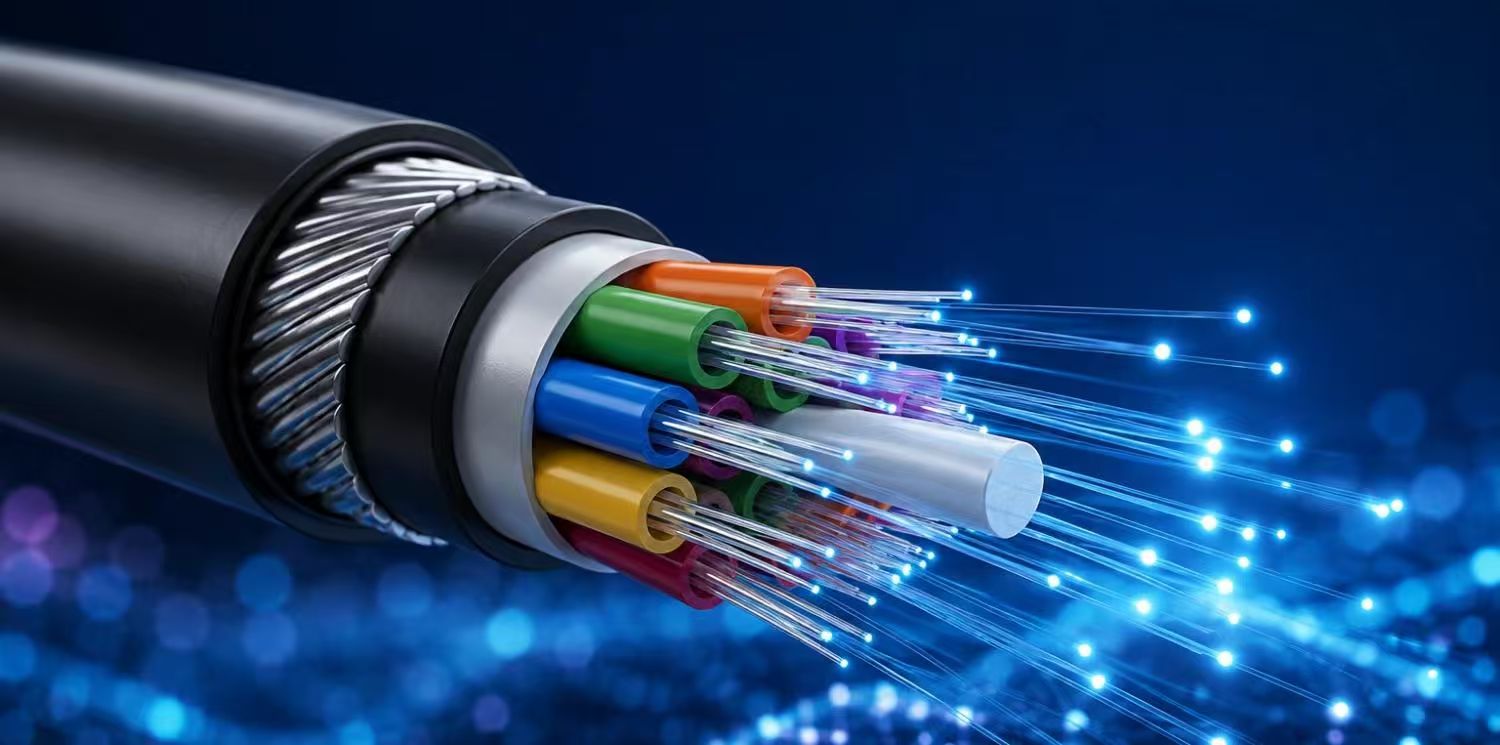
Compared with traditional copper communication cables, fiber optic cables offer high bandwidth, low signal loss over long distances and strong immunity to electromagnetic interference.
These advantages make optical fiber the practical solution for expanding communication capacity and improving network reliability. As digital services continue to grow, fiber infrastructure remains essential for telecom operators, internet service providers and infrastructure contractors.
Where Fiber Optic Cables Are Used
- FTTH networks — delivering high-speed internet to homes and businesses.
- Telecommunication networks — connecting base stations, network nodes and backbone infrastructure.
- Power communication — supporting the communication systems used by electricity utilities.
- Underground and aerial networks — connecting cities, communities and remote locations.
- Data transmission infrastructure — enterprise connectivity and data center interconnection.
Each of these applications calls for a different cable structure and a different set of technical specifications.

Choosing the Right Fiber Optic Cable
Cable selection depends on installation conditions, fiber count, fiber type, mechanical strength, environmental requirements and the standards the project works to.
FTTH drop cables, for example, are built for access networks, while ADSS and OPGW cables are built for aerial telecom routes and power utility corridors. Choosing correctly improves installation efficiency and long-term network performance — and choosing wrongly is expensive to undo once the cable is in the ground.
Conclusion
As global connectivity continues to expand, fiber optic communication remains a fundamental technology for modern digital infrastructure.
Ebocom is a fiber optic cable manufacturer offering customized solutions for telecom operators, distributors, contractors and infrastructure projects. Our product range includes ADSS, OPGW, FTTH drop cable, ASU, GYTA, GYXTW and other indoor and outdoor fiber optic cables.
Contact our team to discuss your project requirements and find a suitable fiber optic cable solution.