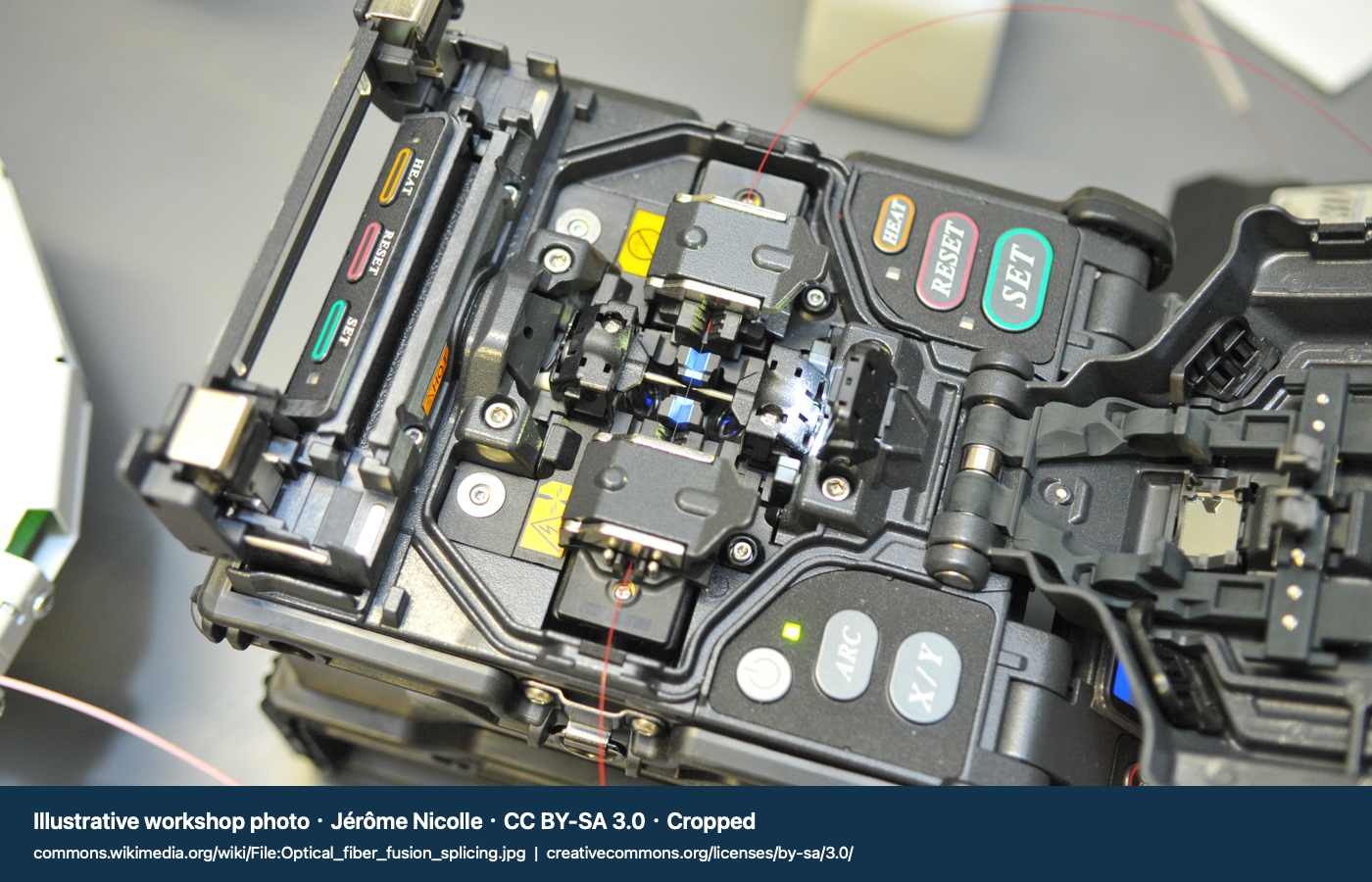
On November 17, 2026, the Fiber Broadband Association (FBA) announced the winners of its first OpTIC Path Regional Rodeo. The competition took place on October 22 in Wilson, North Carolina, during the Gig East Summit anniversary celebration. Fiber technicians competed in installation and splicing tasks.
Kole Piper of Limitless Fiber placed first. Jordan Kerr and Jaylen Lewin, both of Greenlight, placed second and third, respectively. According to the announcement, Piper earned a place in the national OpTIC Path Rodeo scheduled for Fiber Connect 2027 in Nashville, Tennessee. FBA announcement and results.
What the event highlights for fiber projects
A competition makes the craft visible. For project teams, it also offers a reason to look at a handover that happens well before a crew reaches a closure: the point where a buyer or designer passes the cable information to the installation team.
For example, the same fiber count can be supplied in different cable constructions. The cable drawing tells the crew how fibers are grouped and identifies the tube layout and strength members. The splice schedule tells the crew which fibers go to which destination. The closure plan describes how the cable and its tubes will be accommodated. If those documents disagree, finding the discrepancy on paper is easier than resolving it when the cable is already open.
What should travel with the cable?
Before the installation handover, put the approved cable drawing, fiber identification and splice schedule in the same package. Identify the exact cable model and drawing revision on the route schedule. Agree which test files the crew will return, which segments they cover, and how the files will refer back to the relevant fiber and closure IDs.
The project’s own acceptance plan determines what passes. For example, an end-to-end loss test and an event trace provide different evidence. Identifying both deliverables before work starts gives the reviewer a way to connect an optical result to the physical route. Ebocom’s OTDR vs OLTS guide explains the role of each report. Its guide to directional splice readings covers what to check when a splice looks different from opposite ends.