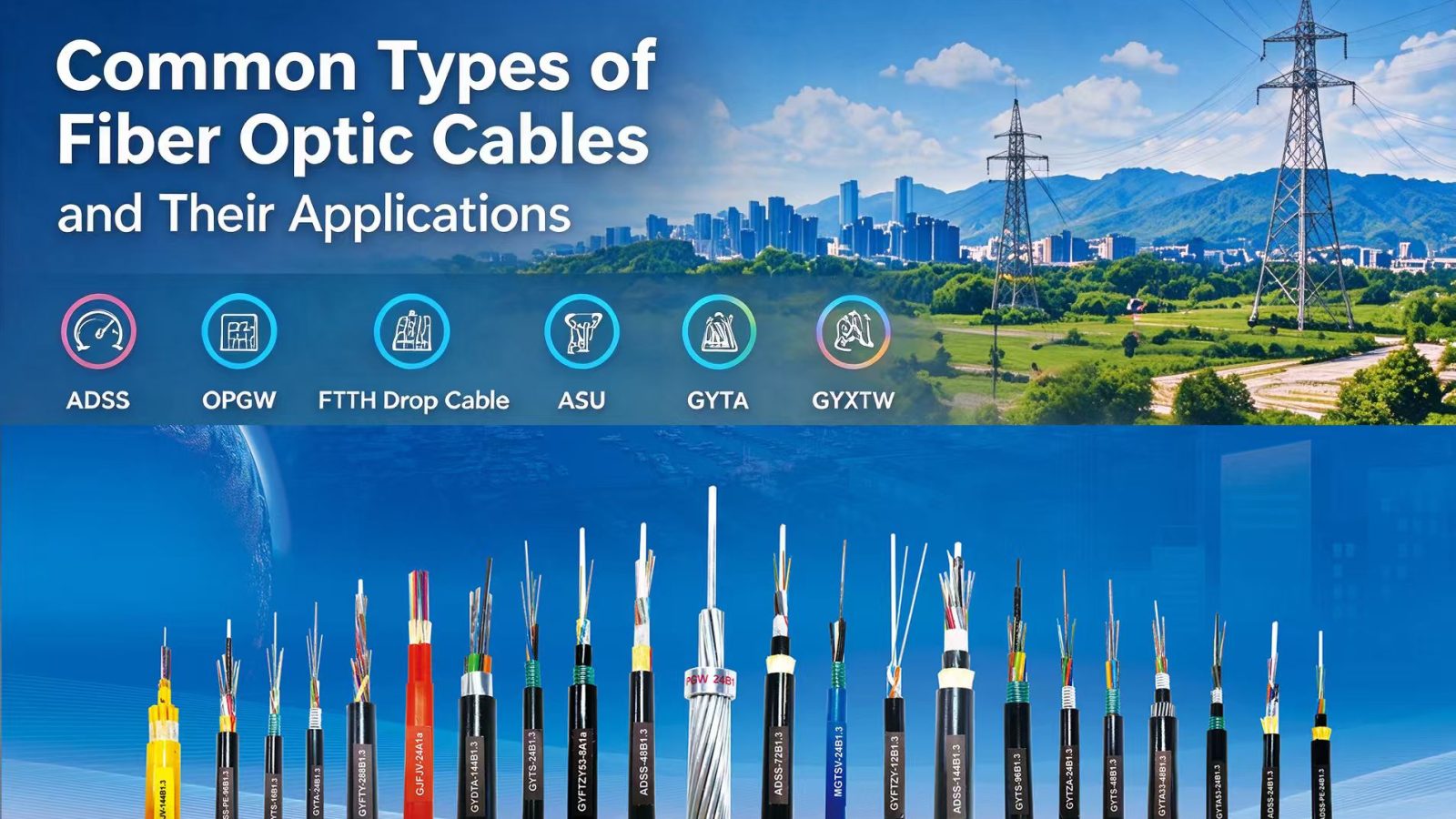
Fiber optic cables are built for different installation environments and different communication requirements. Understanding the main types helps buyers match the cable to the job instead of to the price list.
Here are the cable types most often specified in export projects, and where each one belongs.
1. ADSS Fiber Optic Cable
ADSS stands for All-Dielectric Self-Supporting. It is designed for aerial installation and needs no separate metallic messenger wire — and because it contains no metal, it can be strung on energized lines.
Applications: aerial telecom networks, utility poles and power corridor communication projects.
2. OPGW Fiber Optic Cable
OPGW stands for Optical Ground Wire. It combines optical fibers with the function of an overhead ground wire, so one cable does two jobs on a transmission tower.
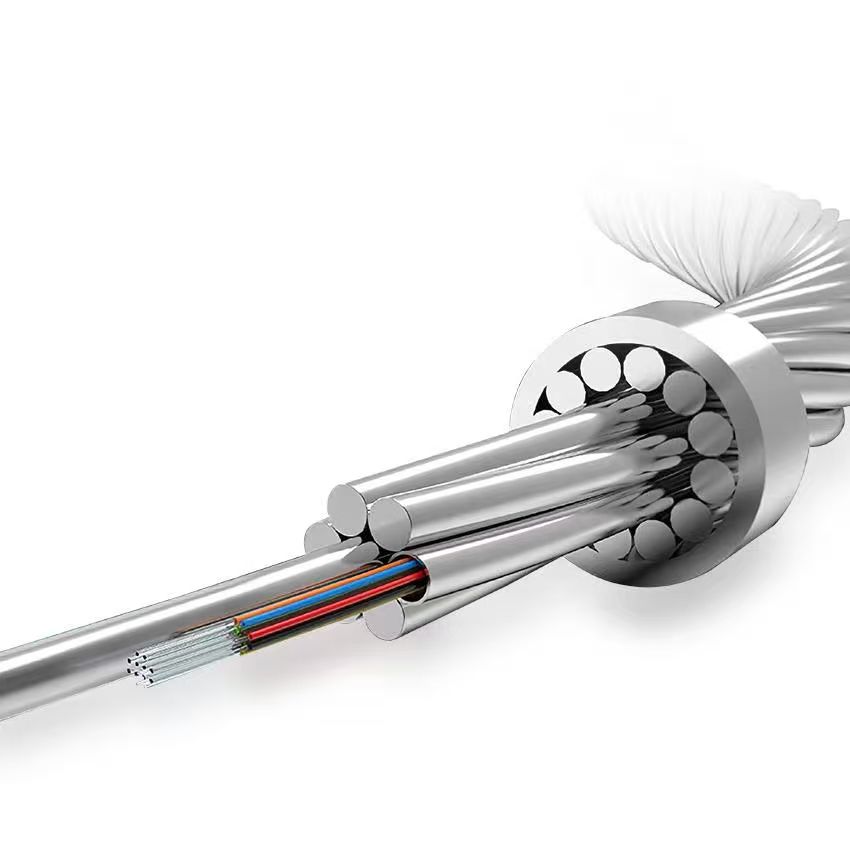
Applications: power transmission lines and electricity utility communication networks.
3. FTTH Drop Cable
FTTH drop cable connects the access network to homes or business premises — the last short run that finishes a fiber-to-the-home deployment.
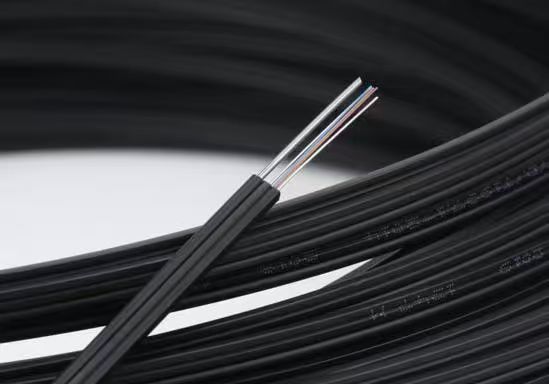
Applications: residential broadband, building access and last-mile fiber connections.
4. ASU Fiber Optic Cable
ASU is a compact self-supporting aerial cable used in outdoor access and distribution networks. Its light construction suits shorter spans where full ADSS would be over-specified.
Applications: aerial telecom distribution, rural broadband and similar outdoor installations.
5. GYTA Fiber Optic Cable
GYTA is a stranded loose-tube outdoor design with aluminum tape armor.
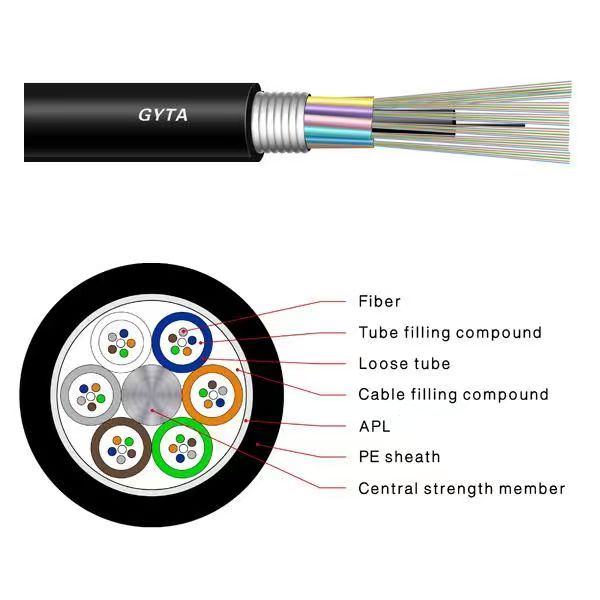
Applications: outdoor duct installations and network routes where this construction is specified.
6. GYXTW Fiber Optic Cable
GYXTW is a central loose-tube design, typically with two parallel steel wire strength members and steel tape armor.
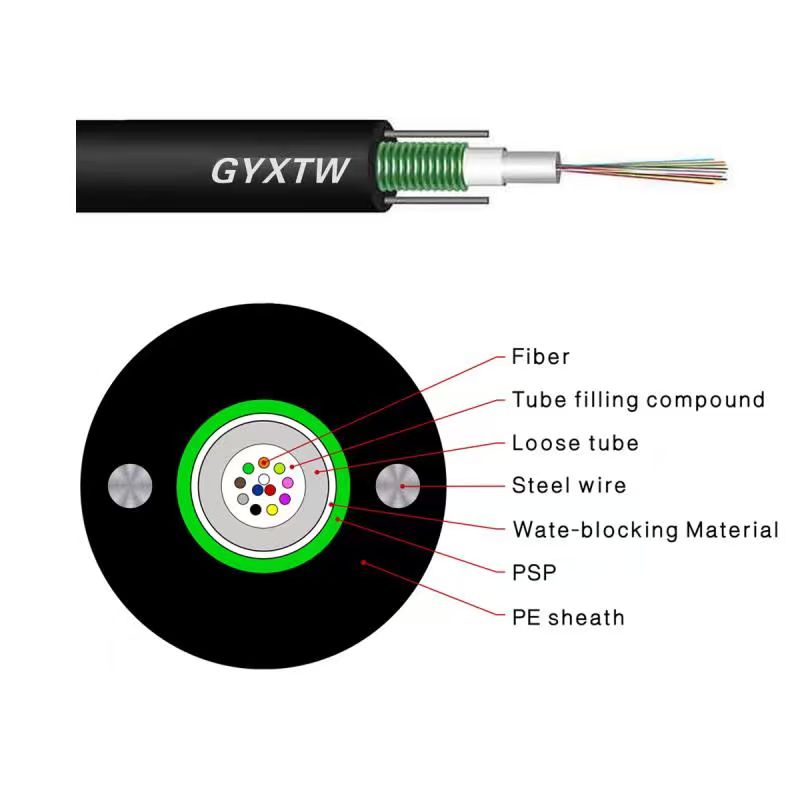
Applications: outdoor access networks, duct routes and aerial installations according to specification.
How to Choose
Before you order, confirm these six things. Most quotation delays come from one of them being missing:
- Fiber type and fiber count
- Installation method and environment
- Cable diameter and mechanical requirements
- Armoring and water-blocking requirements
- Sheath material and temperature range
- Applicable standards and testing requirements
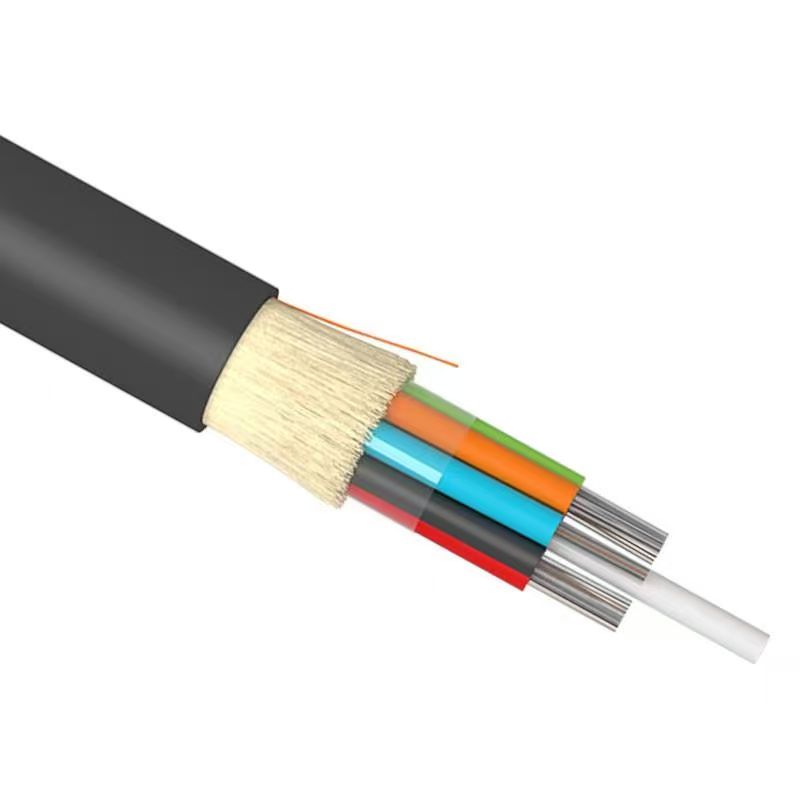
The same cable type can vary considerably between manufacturers and between projects — the model code alone does not fully describe what you will receive.
Conclusion
Selecting the right fiber optic cable starts with the installation environment and the technical requirements, not with the model code.
Ebocom provides customized ADSS, OPGW, FTTH drop cable, ASU, GYTA, GYXTW and other fiber optic cable solutions. Send us your cable type, fiber count, installation method and technical specifications and we will come back with a suitable solution and a quotation.