
Technical Guide
An ADSS cable span should be assessed together with the route’s loading conditions, allowable sag and cable design. The distance between two supports is an essential input, but it is not enough to confirm that a cable is suitable for a project.
For a buyer, the practical goal is to request a quotation that states its design assumptions. This makes it easier to compare offers and identify questions that need the line designer’s approval before an order is placed.
If you are still deciding which overhead cable type fits the project, our ADSS vs OPGW comparison introduces their different roles. This checklist focuses on the next step: defining an ADSS requirement for quotation.
ADSS cable span: why the label is only a starting point
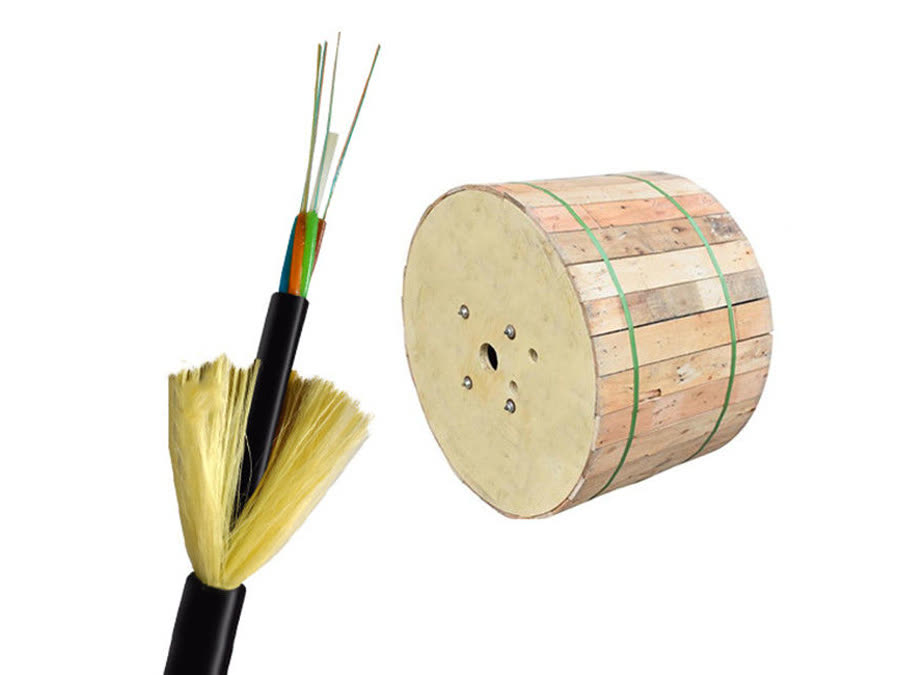
ADSS means all-dielectric self-supporting. In the constructions shown in our ADSS catalog, optical fibers sit inside loose tubes, with nonmetallic strength components and an outer sheath. The catalog includes both single-jacket and double-jacket designs.
Those descriptions identify construction options; they do not replace a project specification. A quotation headed only “ADSS, 48 fibers, 200 m span” leaves several questions unanswered: What wind and ice conditions apply? What sag is permitted? What temperature range was considered? Which fittings are included?
A useful quotation connects the span figure to the proposed cable and records the route conditions used in the assessment.
Prepare route information before choosing a model
A route schedule is more useful than a single average span. It can show the individual spans, the longest crossing and changes in support height or direction. With the project’s design criteria attached, suppliers have a common basis for preparing their proposals.
| Information to provide | What it helps establish |
|---|---|
| Span schedule and route drawing | The locations and geometry that need assessment |
| Design wind, ice and temperature conditions | A common loading basis for comparing proposals |
| Required clearances and allowable sag | The constraints for the sag-and-tension review |
| Fiber count and specified fiber type | The optical configuration requested |
| Support details and proposed attachment points | The installation arrangement and hardware interfaces |
| Section lengths and intended joint locations | The starting point for drum-length planning |
If a value is unavailable, identify it as an open item. A budget quotation can still be useful when its assumptions are visible; it should not be mistaken for an approved construction design.
Confirm the sheath for the electrical environment
For routes on power-line structures, include the line arrangement and intended cable position in the technical review. Sheath selection should account for the electrical exposure at that position, rather than relying on the system voltage alone.
As an external technical reference, AFL’s ADSS product information distinguishes polyethylene and track-resistant sheath options by space potential. Its ratings belong to its own cable designs and should not be transferred to another manufacturer’s product.
Ebocom’s catalog lists PE and AT sheath options. Ask for the proposed sheath, its stated application conditions and the project designer’s acceptance. “All-dielectric” describes the cable construction; it does not by itself authorize work near energized conductors.
Review the cable and fittings as one package
Ask the quotation to identify whether it covers cable only or also includes suspension fittings, dead-end assemblies and any specified vibration-control accessories. Request the applicable cable diameter range and supporting compatibility information for the proposed hardware.
The technical review establishes which proposals address the same requirements. The price comparison can then cover equivalent commercial scope, including drum lengths, packing, inspection documents and delivery terms.
For the cable itself, request a project-specific datasheet with defined tensile limits, installation limits and bending requirements. Ask the responsible designer to review the sag-and-tension information against the approved route. A jacket count or a headline breaking-strength figure cannot answer all of those questions.
Use this ADSS quotation checklist
Copy the following fields into your inquiry and attach the route drawing or tender specification. Mark unknown items clearly so they can be resolved during the technical discussion.
- Project location and applicable design specification.
- Required fiber count, fiber type and total cable quantity.
- Span schedule, longest crossing and support arrangement.
- Design wind, ice and temperature conditions.
- Sag, clearance and attachment-point requirements.
- Power-line arrangement and electrical-environment information, if applicable.
- Required drum lengths, joint locations and hardware scope.
- Requested datasheets, inspection records and acceptance requirements.
Can one ADSS design cover the entire route?
Possibly, but this should be assessed against the full route. Ask the designer and supplier to identify any section that requires a different construction or installation arrangement. If multiple designs are proposed, keep their model references and intended sections clearly separated in the purchase documents.
Discuss your ADSS requirement with Ebocom
Review Ebocom’s ADSS cable range, then send your route information and quotation checklist. Including the project conditions at the start helps make the technical and commercial discussion more specific.